When Lucky Turns Costly: The Hidden Danger of Betting Everything on One Number
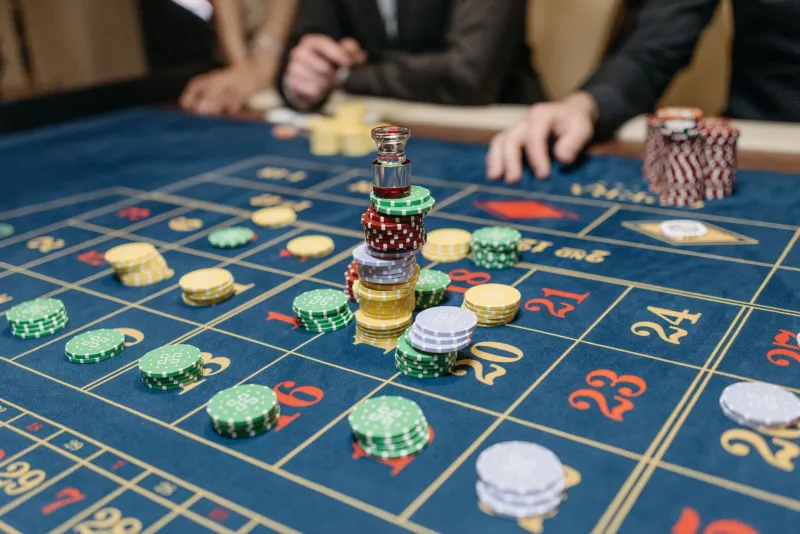
There's a moment most regular players know well. Your number hasn't come up in a while. You feel it in your gut — it's due. So you bump your bet. Then bump it again. By the time that number finally lands, you've either clawed back a fraction of what you've lost, or you've already walked away wondering where the session went sideways.
This is the number loyalty trap, and it catches more players than almost any other behavioral pattern in gaming. At 8Good88, we see it constantly. And while we're all about chasing that good fortune, we also believe smarter play leads to better experiences — and longer winning streaks.
So let's break down exactly why doubling down on your favorite digit might be the single biggest mistake you're making right now.
The Psychology of the "Hot" Number
Humans are pattern-seeking machines. Our brains evolved to find connections, assign meaning, and predict outcomes based on past experience. That worked great for spotting predators on the savanna. It works considerably less great at a lottery terminal or a digital roulette wheel.
When a number shows up twice in a row, your brain logs it as significant. When it doesn't show up for ten rounds, your brain interprets that absence as pressure building — like a spring that's about to release. Neither interpretation is grounded in how random number systems actually work. Each outcome is independent. The wheel doesn't remember. The RNG doesn't owe you anything.
Psychologists call this the gambler's fallacy, and it's one of the most well-documented cognitive biases in behavioral science. A 2014 study published in Psychological Science found that people consistently overestimate the likelihood of an outcome after a streak of the opposite result — even when they intellectually understand the odds haven't changed.
In plain terms: knowing the fallacy exists doesn't make you immune to it.
What the Data Actually Shows About Number Concentration
Let's get into the numbers — pun fully intended.
In games like keno, lottery-style draws, or roulette, concentrating your wagers on a single number might feel like focus. In reality, it's a form of variance amplification. You're not increasing your probability of winning — you're increasing the size of your swings.
Here's a simplified example. Say you're playing a game where your number has a 1-in-38 chance of hitting on any given round (standard American roulette odds). If you spread $38 across 38 different numbers at $1 each, you break even every round. If you put all $38 on your lucky number, you either win $1,330 or lose everything — and statistically, you'll lose everything about 37 out of every 38 spins.
Now here's where number doubling gets dangerous. Players who concentrate their play on one number often increase their stake when that number doesn't hit, assuming the odds are shifting in their favor. They're not. What's actually shifting is their exposure. A player who starts at $5 on their lucky number and doubles after each miss has spent $635 before they've even hit seven rounds in — all chasing the same fixed probability.
The math doesn't care about your feelings. Neither does the RNG.
Why 88 and Other "Power Numbers" Feel Different
In American gaming culture, certain numbers carry serious weight. Eight is considered one of the luckiest digits across multiple traditions — especially in East Asian cultures where its pronunciation sounds like the word for prosperity. Double eight, or 88, doubles down on that symbolism. It's baked into our brand name for a reason: there's real joy in lucky numbers, and real cultural meaning behind them.
But there's a difference between enjoying a number's symbolism and financially committing to it as a strategy.
Players who treat 88 — or any number — as a guaranteed pathway to wins often fall into a specific trap: they start chasing the number rather than playing the game. Their session stops being about entertainment and starts being about proving the number right. That emotional investment clouds judgment, inflates bet sizes, and turns a fun gaming session into something that feels more like a grudge match.
The number isn't failing you. You're just asking it to do something numbers can't do.
The Spread Play Alternative
If concentrating on one number carries this much risk, what's the smarter move?
Experienced players — the ones who tend to stay in the game longer and walk away more satisfied — often practice what's loosely called spread play. Instead of loading up on a single digit, they distribute wagers across a broader range of outcomes. This doesn't improve the underlying odds, but it does something arguably more valuable: it smooths out the variance.
Smaller, more frequent wins keep sessions feeling rewarding. They also make it easier to stick to a budget, because you're not constantly chasing a single big hit to justify the session. The psychology of spread play is actually healthier for most casual gamers — more wins, even smaller ones, triggers more positive reinforcement without the crushing lows of a concentrated losing streak.
At 8Good88, we're big believers in playing for the experience. A session that has ten small wins scattered across it feels better than one that has nine total misses and one big hit — even if the dollar amounts are identical.
Keeping Your Lucky Number Without Letting It Wreck You
Here's the good news: you don't have to abandon your lucky number. You just have to put it in its proper place.
Think of your lucky number as a fun addition to your session — a small, fixed-stake bet you make because it brings you joy and connects you to something meaningful. Allocate a specific, small portion of your session budget to it. Maybe it's one or two plays at a consistent stake. Then let the rest of your session breathe.
If your number hits, great — celebrate it. If it doesn't, you haven't torched your bankroll trying to will it into existence.
The players who enjoy gaming the most aren't the ones who found the perfect lucky number. They're the ones who figured out how to play smart and play fun at the same time. Lucky numbers are part of the fun. Making them your entire strategy is where the trouble starts.
The Bottom Line
Number loyalty is one of the most human things about gaming. It's also one of the most expensive habits you can develop if you let it run unchecked. The 88 bet strategy — or any version of doubling down on a single number because you believe it's due — isn't a winning formula. It's a psychological loop that feels logical but runs directly against how probability actually works.
Play your lucky numbers. Enjoy them. Just don't let them play you.