Count to Eight Before You Commit: The Pause That Could Save Your Bankroll
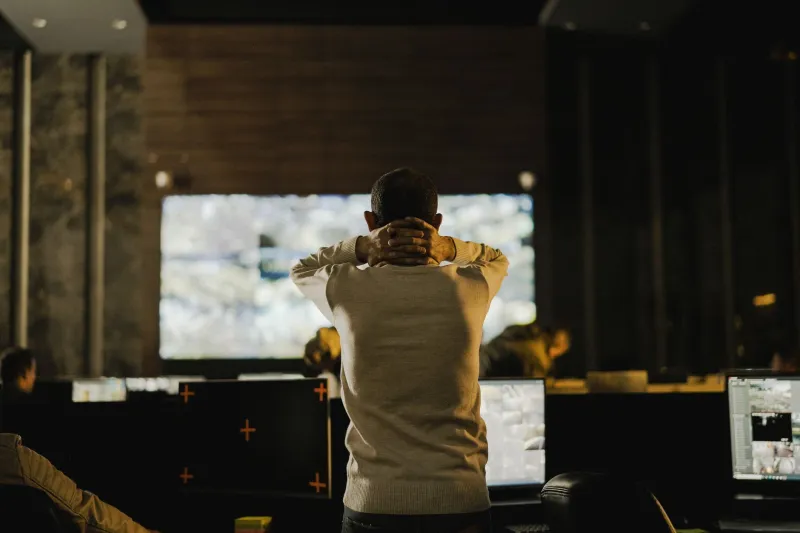
You've been there. The screen lights up, the moment feels right, and before your brain has fully caught up, your finger has already hit the button. It's done. The bet is placed. And somewhere in the back of your mind, a tiny voice whispers — did I really think that through?
For a huge chunk of casual players, that split-second impulse isn't just a habit. It's a pattern. And patterns, once you spot them, can be changed.
At 8Good88, we talk a lot about luck — but we also know that luck tends to favor the players who give themselves a fighting chance. And one of the simplest, most underrated tools in any player's kit isn't a strategy chart or a lucky charm. It's a pause. Specifically, an eight-second one.
Why Your Brain Loves to Rush
Here's the deal with your brain: it's wired for speed. The part of your brain responsible for quick emotional reactions — the amygdala — fires up almost instantly when you're excited, whether that's from a near-win, a flashy animation, or just the general buzz of a live game. It's the same mechanism that kept your ancestors from getting eaten by predators. Fast reactions equal survival.
But in a gaming environment? That same lightning-fast instinct can work against you.
Neuroscientists at places like the University of Iowa have studied decision-making under emotional arousal, and the findings are pretty consistent: when people are emotionally activated — even in a mildly exciting way — they tend to underestimate risk and overestimate reward. In plain English, your brain basically tells you the next bet is a great idea even when it objectively isn't.
The prefrontal cortex, which handles rational thinking and consequence-weighing, operates on a slightly slower clock. Give it a few extra seconds, and it can actually do its job. That's the whole point of the eight-second rule.
What Eight Seconds Actually Does
Eight seconds isn't arbitrary — it maps neatly onto what researchers call the "deliberation window," the brief gap between impulse and action where conscious reasoning can step in and take the wheel.
During those eight seconds, a few things happen:
- Your emotional spike starts to level off. That initial rush of excitement begins to fade just enough for clearer thinking to emerge.
- You reconnect with your original plan. Most players set a budget or a session goal before they start. Eight seconds gives you a beat to ask, is this bet consistent with what I decided earlier?
- You filter out noise. Flashing graphics, sound effects, and the general sensory overload of an online gaming environment are all designed to keep you engaged. A deliberate pause cuts through some of that stimulus.
It's not about second-guessing every single move. It's about creating a tiny but meaningful gap between feeling and action.
Real Players, Real Results
Talk to experienced players in casual gaming communities — the forums, the Discord servers, the Reddit threads — and you'll find versions of this same story repeated over and over.
One player from Ohio described it this way: "I used to just go on autopilot. I'd sit down with $40 and somehow walk away having spent $80 without even noticing how it happened. I started counting to eight before every bet, literally out loud when I was alone, and it felt ridiculous at first. But within a week I was staying inside my budget almost every session."
Another player from Texas put it more bluntly: "I realized I was chasing. Every time I lost, I just wanted to put money in faster to get it back. The pause broke that cycle. Even if I still lost, I felt like I was making the decision, not my emotions."
That sense of agency matters more than people think. Research on gambling behavior consistently shows that players who feel in control of their decisions — even when outcomes are random — report more positive experiences and are less likely to chase losses aggressively.
How to Actually Build the Habit
Knowing about the eight-second rule and actually using it mid-session are two different things. Here's how to make it stick:
Anchor it to a physical cue. Before you place any bet, do something physical — take a breath, put both hands flat on the desk, or simply look away from the screen for a moment. Physical anchors help interrupt the automatic flow from impulse to action.
Set a visible timer once. You don't need to time every single bet forever, but doing it literally for your first few sessions — using your phone's stopwatch — builds the muscle memory. After a while, your internal sense of eight seconds becomes surprisingly accurate.
Use a pre-session intention statement. Before you log in, say out loud (or write down) your session budget and your stop point. When you're mid-game and that eight-second window opens, you have something concrete to check against.
Give yourself permission to skip a bet. This one's underrated. A lot of impulsive betting comes from a fear of missing out — if you don't bet right now, you'll miss the moment. Remind yourself that there's always another round, another spin, another draw. The game isn't going anywhere.
The Luck Factor Doesn't Change — But You Do
Here's the honest truth: eight seconds won't change the odds of any individual game. The randomness is baked in, and that's part of what makes gaming fun. What the pause does change is how you interact with those odds over time.
Impulsive players tend to deviate from their own plans. They bet more when they're down, bet faster when they're up, and rarely stick to the session limits they set for themselves. Deliberate players — even casual ones — tend to play more consistently, which means their experience of the game is smoother and, frankly, more enjoyable.
And enjoyment, at the end of the day, is the whole point.
At 8Good88, we're big believers in playing smart so you can play longer. Eight seconds isn't a magic formula, but it's one of the most practical, science-backed micro-habits a player can adopt. It costs you nothing. It takes almost no effort. And the players who swear by it will tell you it changed the way they think about every single session.
So next time the screen lights up and your finger is hovering — count to eight. See what happens.
You might be surprised by what you decide.