Wait Before You Wager: How One Tiny Pause Can Change Your Entire Gaming Session

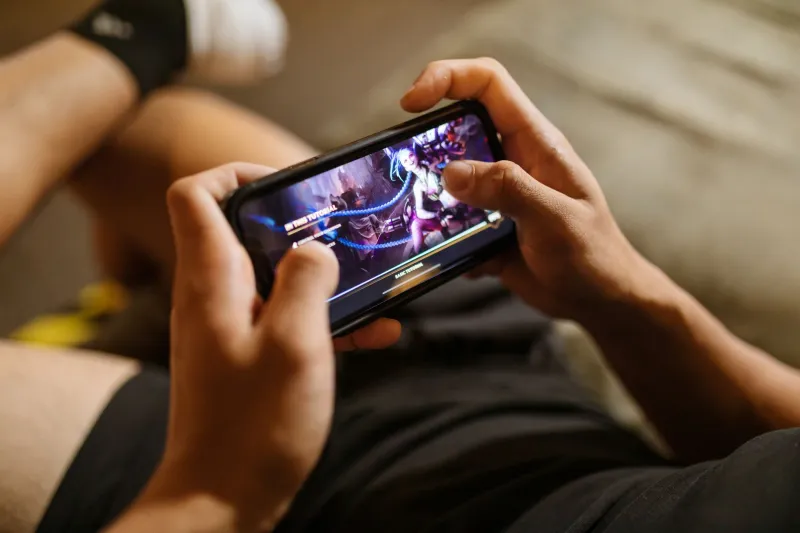
You know that little flicker of hesitation right before you lock in your first bet? The one that lasts maybe eight seconds, tops — where your finger hovers, your eyes scan the board one more time, and your brain quietly asks, are you sure?
Most players bulldoze right through it. And honestly? That might be the biggest mistake they're making.
At 8Good88, we spend a lot of time thinking about what separates players who walk away satisfied from those who look back and wonder where the session went sideways. More often than not, the difference isn't luck — it's that tiny window right before the very first move.
The Moment Nobody Talks About
Pre-game rituals get a ton of attention. Everybody's got an opinion on lucky numbers, playlist choices, or which day of the week feels hottest. But the micro-moment within the game — specifically, those first few seconds before your opening bet — barely gets a mention.
That's a missed opportunity, because behavioral researchers have been quietly documenting how initial decisions function as anchors for everything that follows. In gaming contexts, your first bet isn't just a financial commitment. It's a psychological one. It sets a tempo, establishes a risk tolerance in your brain, and creates a kind of mental baseline that influences how you interpret every outcome after it.
Skip over that moment carelessly, and you're essentially handing your session over to autopilot.
Why Eight Seconds Feels Like the Sweet Spot
Here's an interesting wrinkle: the hesitation window matters, but so does its length. Too short, and you're reacting on pure impulse — whatever number looked good, whatever game felt shiny, whatever the last player near you seemed to win on. Too long, and you tip over into what psychologists call decision paralysis, where overthinking starts manufacturing doubt that has nothing to do with strategy.
Somewhere in that middle ground — roughly the time it takes to breathe in, look at your options, and breathe out — is where something genuinely useful happens. Your working memory gets a chance to surface relevant context: your budget for the session, which games you've had decent runs on lately, how you're feeling physically and mentally right now.
None of that is mystical. It's just your brain doing a quick audit before you spend real money. Eight seconds is long enough to let that process work. It's short enough that you're not manufacturing anxiety.
The Impulsive Player vs. The Micro-Strategic Player
Let's be real — nobody's calling themselves a "strategic" player when they're sitting down for a casual session on a Tuesday night. And there's absolutely nothing wrong with playing for the fun of it. That's kind of the whole point.
But there's a meaningful difference between casual and careless. Casual means you're there to enjoy the experience, keep things light, and see where the session takes you. Careless means you're not even present for your own decisions.
The micro-strategic player — and this doesn't require any advanced gaming knowledge — is simply someone who shows up to their own session. They notice which games are pulling their attention and ask themselves why. They set a quick mental budget before the first bet rather than after the third. They check in with their gut, not because their gut is always right, but because ignoring it entirely tends to lead to sessions that feel hollow even when they technically go fine.
That eight-second pause is the cheapest tool available for becoming that player. No spreadsheets, no complicated systems, no superstitions required.
What Hesitation Is Actually Telling You
Here's a reframe worth sitting with: hesitation before a bet isn't weakness or uncertainty. It's data.
When you pause and feel a pull toward a specific game, that's your memory and pattern recognition doing background processing. When you pause and feel vaguely uneasy, that might be a signal worth honoring — maybe your head isn't fully in it today, or your budget is tighter than usual and you haven't consciously acknowledged that yet.
Obviously, no amount of pausing turns a game of chance into a game of skill. The odds are what they are, and that's part of the appeal — the beautiful unpredictability of it all. But your experience of a session, and how you make decisions throughout it, is absolutely something you have influence over. And it starts before you ever press play.
The Ripple Effect Through Your Session
One of the more fascinating things about that first-bet moment is how it tends to ripple outward. Players who take a deliberate breath before their opening move often report feeling more grounded throughout the session — not necessarily winning more, but making choices they feel better about in retrospect.
Part of this is psychological consistency. When you start a session intentionally, you're more likely to keep checking in with yourself as it unfolds. Did that last outcome change my plan? Am I still within the range I set? Is this still fun, or am I chasing something?
Those check-ins don't happen automatically for most people. They're a habit you build, and the first bet is where you either plant that habit or skip it.
Making the Pause Work for You
If you want to actually try this — and we think it's worth at least one honest experiment — here's a simple way to approach it:
Before your first bet of any session, give yourself a full eight-count. Not a countdown, just a natural pause. During those seconds, ask yourself three quick things: What's my comfortable limit for this session? Which game genuinely interests me right now (not just the first one I see)? How's my headspace — am I here to enjoy this, or am I already distracted?
You don't need brilliant answers. You just need to ask. The act of asking is what shifts you from passive to present.
From there, play however you'd normally play. The goal isn't to turn a casual gaming session into a philosophy seminar. It's just to give yourself eight seconds of agency before the game takes over.
The Smallest Edge You'll Ever Find
At 8Good88, we're all about finding those little moments where luck and smart play intersect — because that's where the most satisfying sessions tend to live. And while we'll never tell you there's a guaranteed formula for winning, we do believe that the player who shows up with intention plays a different game than the one who doesn't.
The eight-second pause costs you nothing. It doesn't change the odds. It doesn't require any special knowledge or technique.
It just asks you to be present for your own first move.
That's a pretty good investment, no matter how the rest of the session goes.