Your 'Lucky' Numbers Are Everyone Else's Too — And That's Costing You
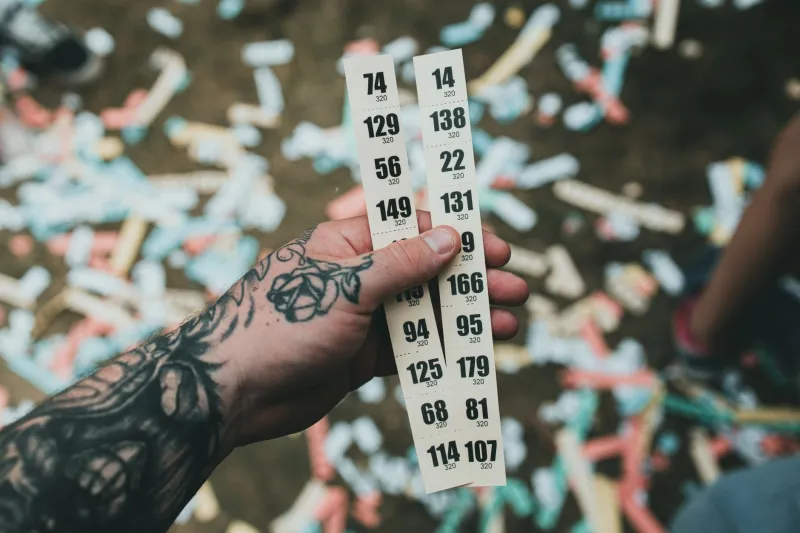
There's a moment every player knows. You sit down, you've got your slip in hand, and without even thinking twice, you reach for the same numbers you always play. Maybe it's your mom's birthday. Your wedding anniversary. The jersey number of your favorite childhood athlete. Feels personal. Feels right. Feels lucky.
Here's the uncomfortable truth: that feeling of uniqueness? It's completely fake. And chasing it might be the single most expensive habit you have as a player.
The Comfort Trap Nobody Talks About
Humans are wired to attach meaning to numbers. Psychologists call it numerical significance bias — the deeply ingrained tendency to assign emotional weight to certain digits based on personal experience. Birthdays are the big one. In the US, the most commonly played numbers in multi-draw games consistently cluster between 1 and 31. Why? Because months only go up to 12 and days only go up to 31. Birthday players have been boxing themselves into the same narrow range for decades without realizing it.
And it's not just birthdays. Anniversary dates, kids' ages, addresses, graduation years — all of these pull players toward the same predictable zone. When millions of people independently make the same "personal" choice, that choice stops being personal at all. It becomes a statistical traffic jam.
The real cost isn't just a matter of odds. In games where prizes are split among multiple winners, playing popular number combinations means that even if your numbers hit, you're dividing that pot with potentially thousands of other players who had the exact same idea. Your share shrinks. Your payout suffers. And you walk away feeling like you almost won big — when really, the system quietly worked against you from the moment you picked up that pen.
Sequential Digits: The Other Crowd Favorite
Birthdays aren't the only trap. Sequential number strings — think 1-2-3-4-5-6 or 10-20-30-40-50 — are played far more often than you'd expect. Most people assume nobody actually plays those combinations seriously, which ironically makes them feel like a clever, contrarian pick. Spoiler: everyone thinks they're being clever. These "joke" combinations get played in massive volumes, especially around major jackpot runs when casual players flood in.
Same goes for number ladders (5-10-15-20-25), mirror patterns (11-22-33-44), and corner fills on play slips (the four corners plus center of a standard grid). These aren't random quirks. They're deeply human, visually intuitive choices — and game operators have studied them extensively. The patterns that feel unusual are almost always anything but.
So What Do Actual Winners Favor?
This is where it gets interesting, and we want to be clear: no number combination carries better raw odds than another in a truly random draw. The math doesn't care about your feelings. What changes is what happens after a win — specifically, how many people you're splitting with.
Analysis of publicly disclosed jackpot data across major US lottery games shows a consistent pattern: winners who walk away with undivided or minimally divided jackpots tend to have played combinations heavy in numbers above 31. Numbers in the 32-69 range (in games that allow them) are demonstrably less popular, simply because they fall outside the birthday window. They carry no obvious personal significance for most players, so most players avoid them.
Winners also tend to avoid obvious visual patterns on play slips. Diagonal lines, crosses, and edge-hugging number clusters are all surprisingly common choices — and surprisingly bad ones for the same reason. The more a pattern jumps out as aesthetically satisfying on a grid, the more likely someone else noticed it too.
Interestingly, some seasoned players deliberately seek out numbers that feel almost uncomfortable to choose. Numbers that seem arbitrary. Numbers that have no story attached to them. Not because those numbers are luckier — they're not — but because fewer people will have chosen them if the draw comes up right.
The Psychology of Letting Go
Here's where it gets genuinely hard. Telling someone to abandon their lucky numbers isn't just a strategic suggestion — it feels like asking them to betray something. That jersey number? It represents real memories. Your grandmother's birthday? That's love encoded in digits. Swapping those out for a random cluster of high numbers feels cold, impersonal, almost disrespectful.
But that emotional attachment is exactly the mechanism that game designers — and the math — quietly exploit. Your numbers feel lucky because they feel yours. The problem is they're not. They belong to millions of other players who have the exact same emotional logic running in the background.
Breaking the pattern doesn't mean playing without intention. It means redirecting your intention. Instead of asking "what numbers mean something to me?" try asking "what numbers would I never think to play?" That shift in question leads to a very different slip.
A Different Way to Play at 8Good88
At 8Good88, we're big on the idea that smart casual gaming starts with understanding how your own brain works — not just how the games work. The number 8 is famously tied to luck and prosperity across cultures, and our platform leans into that energy. But we also know that real players don't just rely on vibes. They think.
If you're playing for fun, play your birthday numbers. Play your anniversary. Play whatever makes the experience feel meaningful, because that's a completely valid reason to play. But if you're playing with an eye toward maximizing what a win could actually be worth, it's worth stepping back and questioning the comfort of familiarity.
The safest-feeling numbers are, in a very real sense, the riskiest ones — not because they're less likely to be drawn, but because when they are drawn, you're never the only one celebrating.
The Takeaway
The gambler's paradox is this: the numbers that feel the most personal are the ones most likely to be shared. The more meaning you attach to a combination, the more other players have probably attached the same meaning for the same reasons.
True randomness is actually your friend here. It's uncomfortable, it's emotionally unsatisfying, and it produces numbers that won't make a great story at Thanksgiving — right up until the moment they do.
Next time you sit down to play, try this: pick at least half your numbers from ranges you'd normally skip. Go high. Go weird. Go boring. Because in a game played by millions of people all trying to feel unique, boring might just be the most interesting strategy of all.